Migration of a Public Energy Company’s Websites
From August 2022 through May 2023, I served as content lead on a national energy company’s project to migrate its web content from their deprecated SharePoint platform to a new, modern headless content management system. This had to be done under a strict deadline and with minimal impact to energy customers throughout their service areas.
In total, content and functionality from six public sites, operated by four business units had to be migrated to the new platform.
Discovery and Stakeholder Interviews
We began the project by hosting stakeholder interviews. Our project was meant to have as little impact on the site’s end-users as possible, which allowed us to focus our efforts on understanding the hopes and expectations of our internal teams–the people who would be most impacted by the migration.
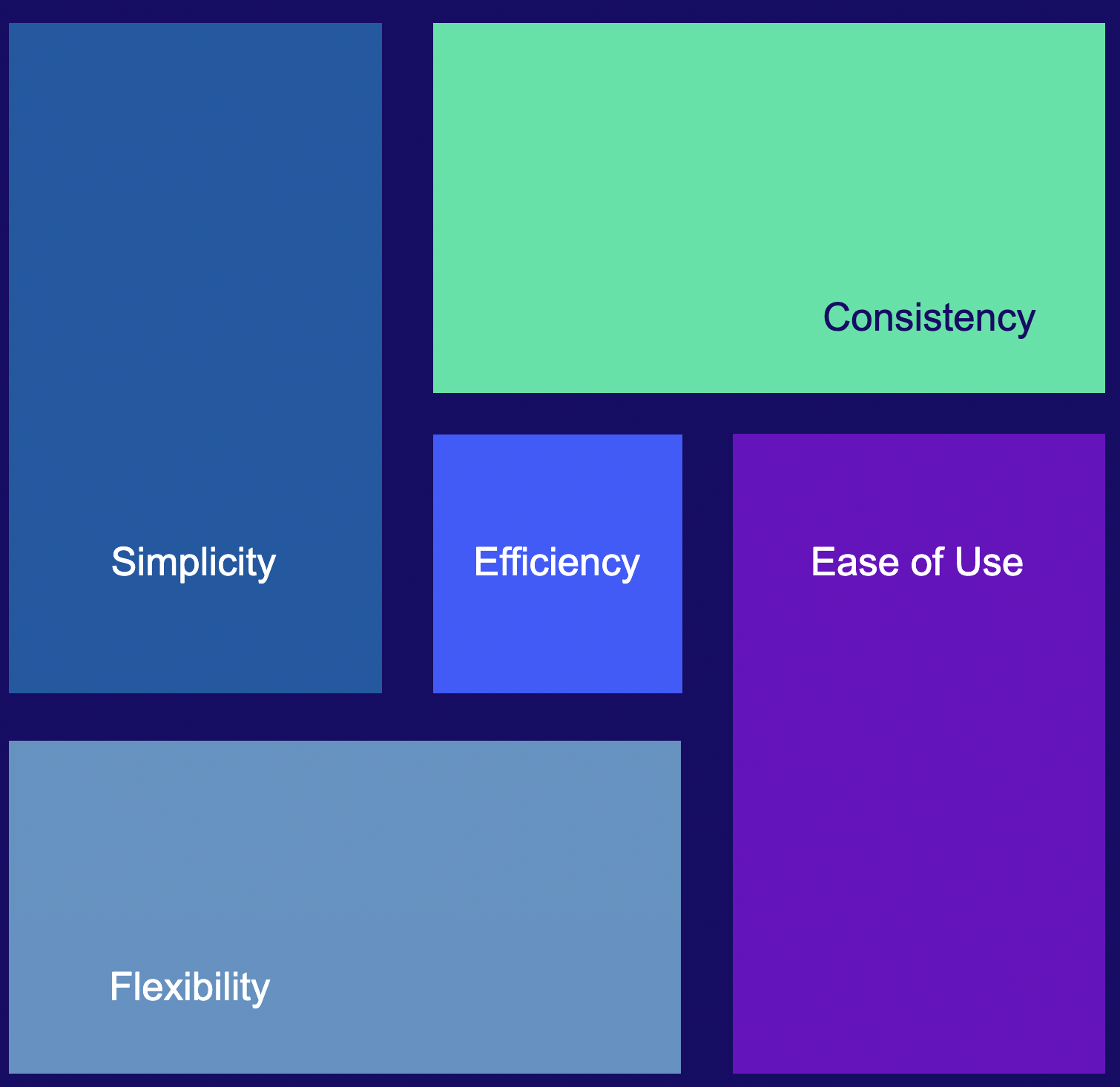
I also generated inventories of the sites’ pages and analyzed key content pages to understand the scope and breadth of the legacy sites. I used these inputs to move into the next phases of the project.

Content Architecture
Establishing Site Libraries
Initial thinking from business leadership was to define a site library for each business unit, with one business unit managing three sites from a single library. This decision made sense in the context of upfront savings on hosting costs, which was tied to the number of libraries.
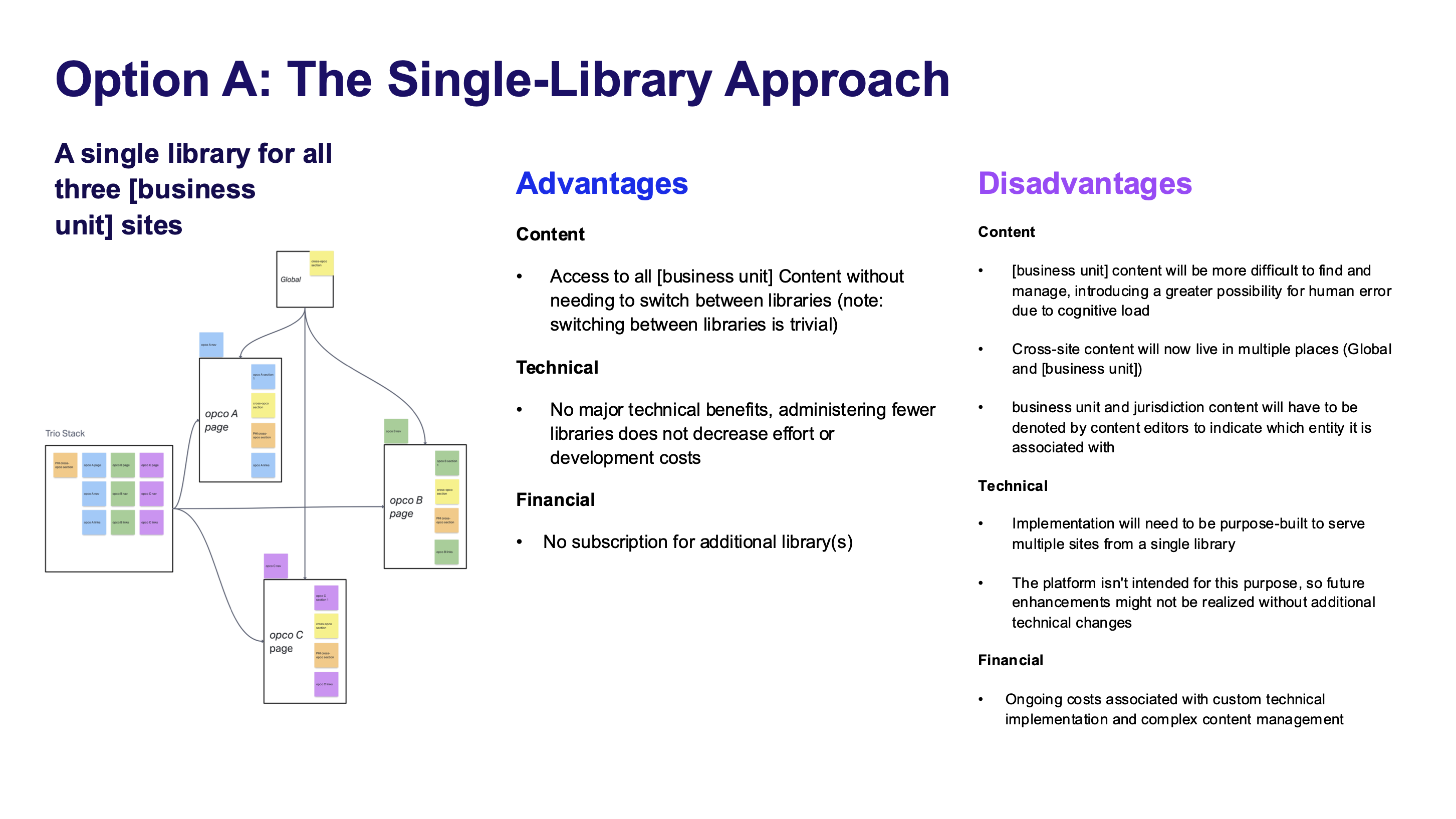
I was asked to evaluate this decision and concluded that any initial savings would be outweighed in the longterm by increased technical complexity and inconsistency among properties.
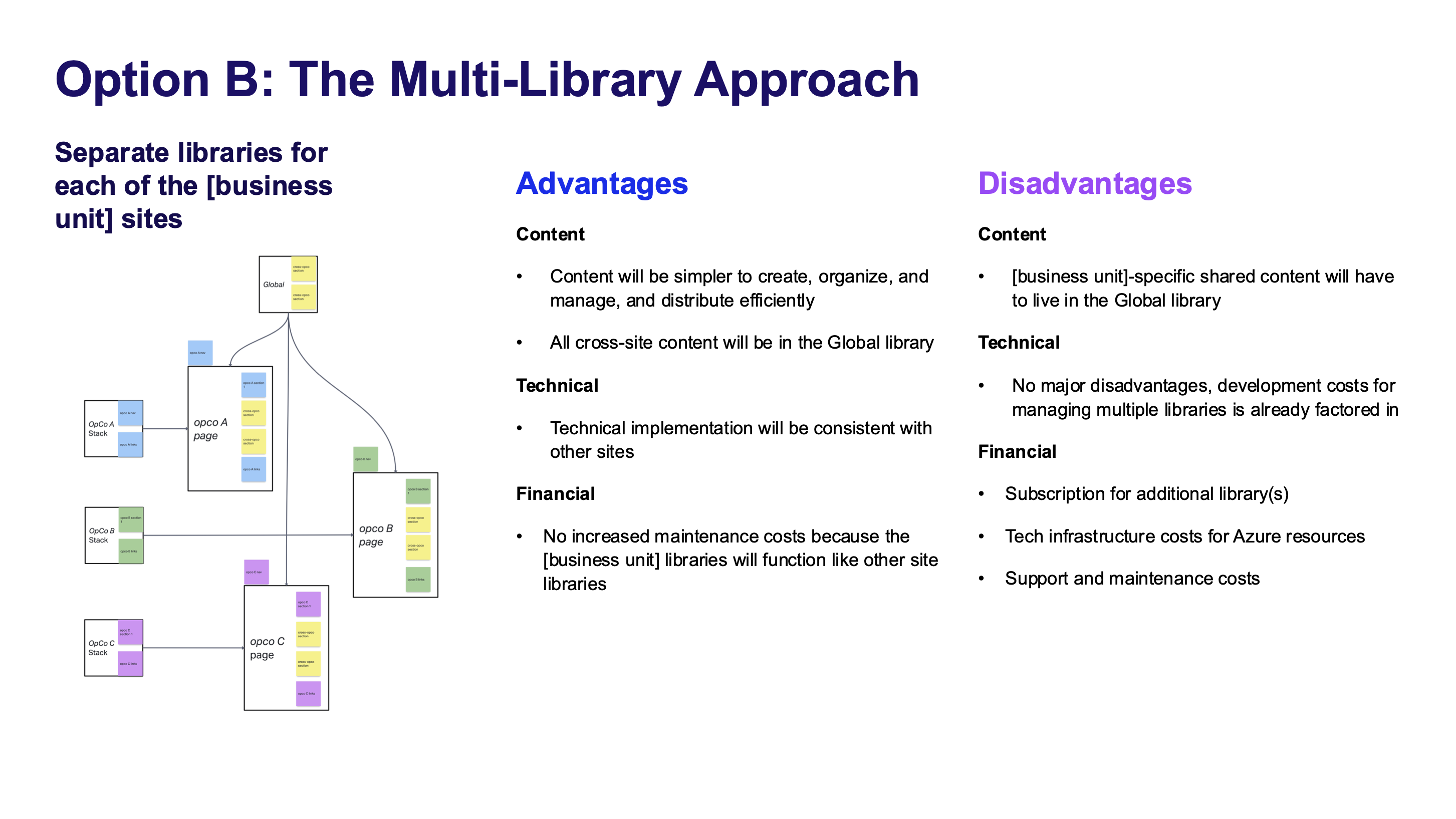
Ultimately, I was successful in advocating for a plan that would allow for simpler management of the sites. My solution provided each site with its own library and included an additional, central library. This central library encouraged collaboration and standardization of content common among each of the sites and business units. This resulted in a more uniform solution, which still provided a straightforward way to distribute shared content and assets among the subsidiaries.
Designing Content Models
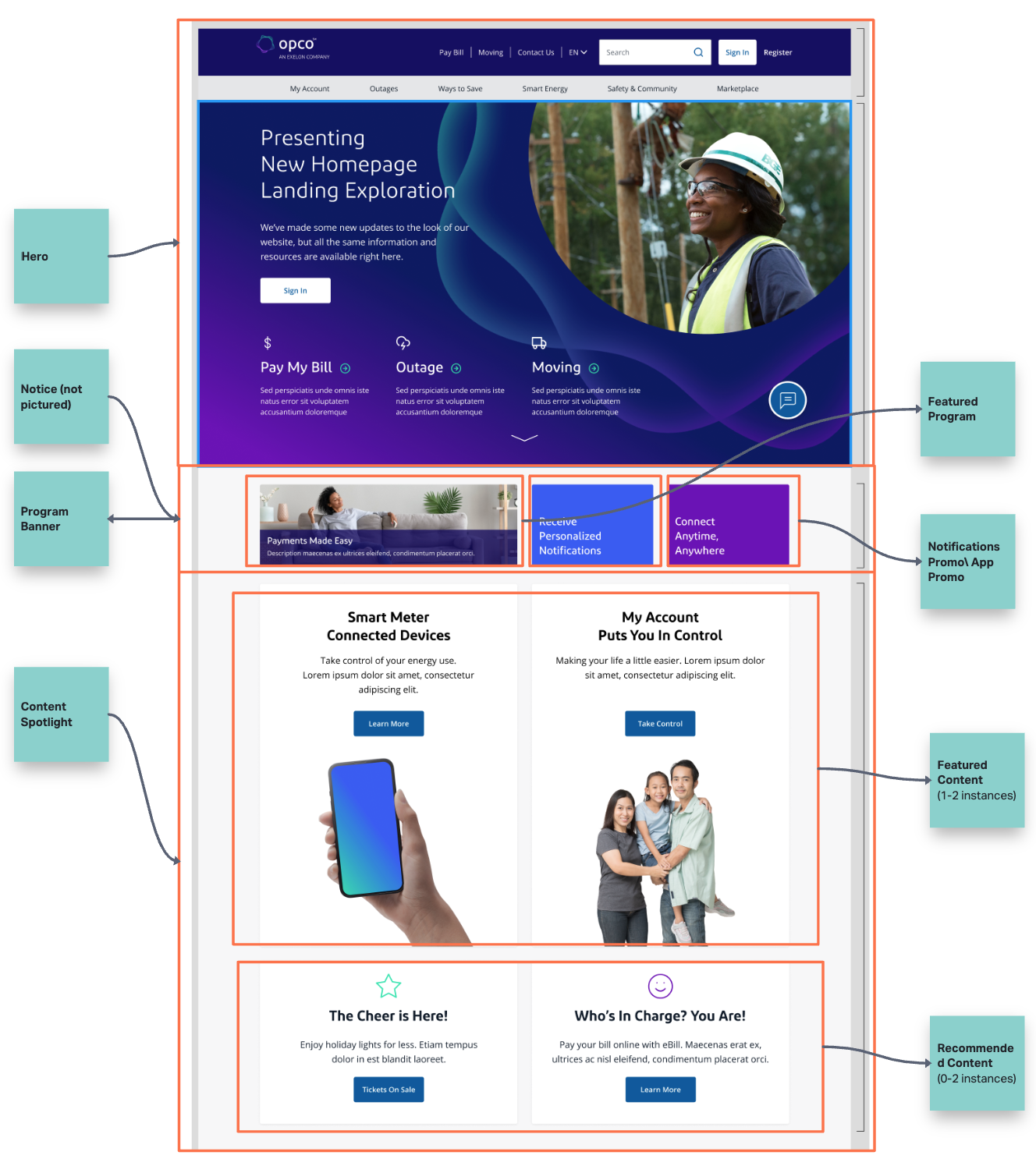
In addition to my contributions to the site library approach, I led the initiative to define, iterate on, and configure the content models for the new platform. While our primary goal was to provide space to host the existing web content, we made strategic decisions to ensure that the approach would support an emerging omichannel content strategy.
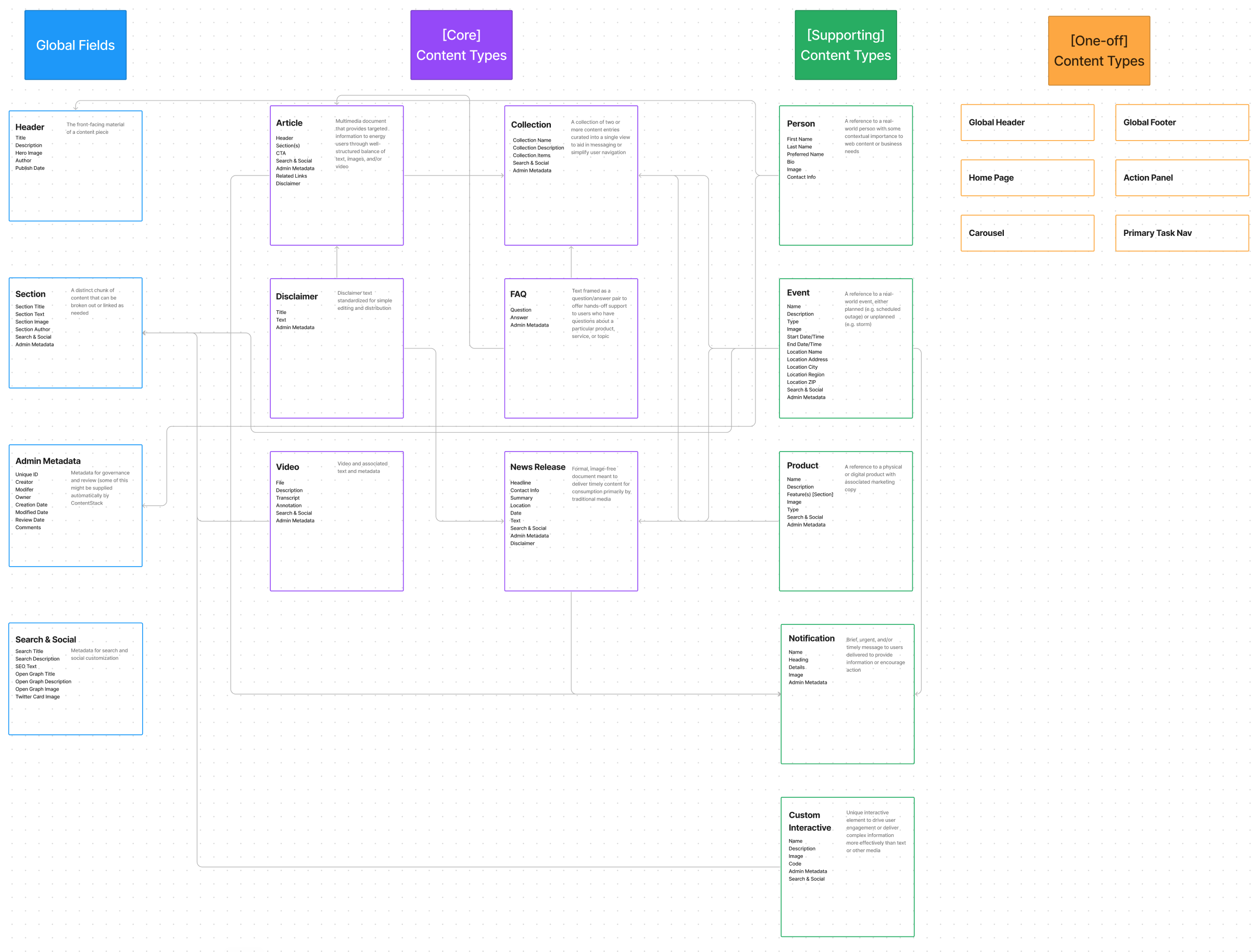
Once an initial set of content types was established, I revised them to support new page designs that met modern brand and accessibility standards.
Promoting Organizational Awareness
While we evaluated the proposed content models for technical feasibility and finalized the newly proposed design templates, I hosted a presentation series to educate key people throughout the organization about the adoption of the new content management platform.
This presentation served two purposes: first it allowed our stakeholders to begin considering how their processes might be improved through the new platform, and second, it encouraged collaboration and feedback to further support the design process.
Training and Migration Support
Finally, I created usage guides for each of the content types to help content managers and authors understand how to make the most out of the new system. I also developed a training plan and co-led training sessions to guide employees through the process of migration and site maintenance.
 Justin Wilson